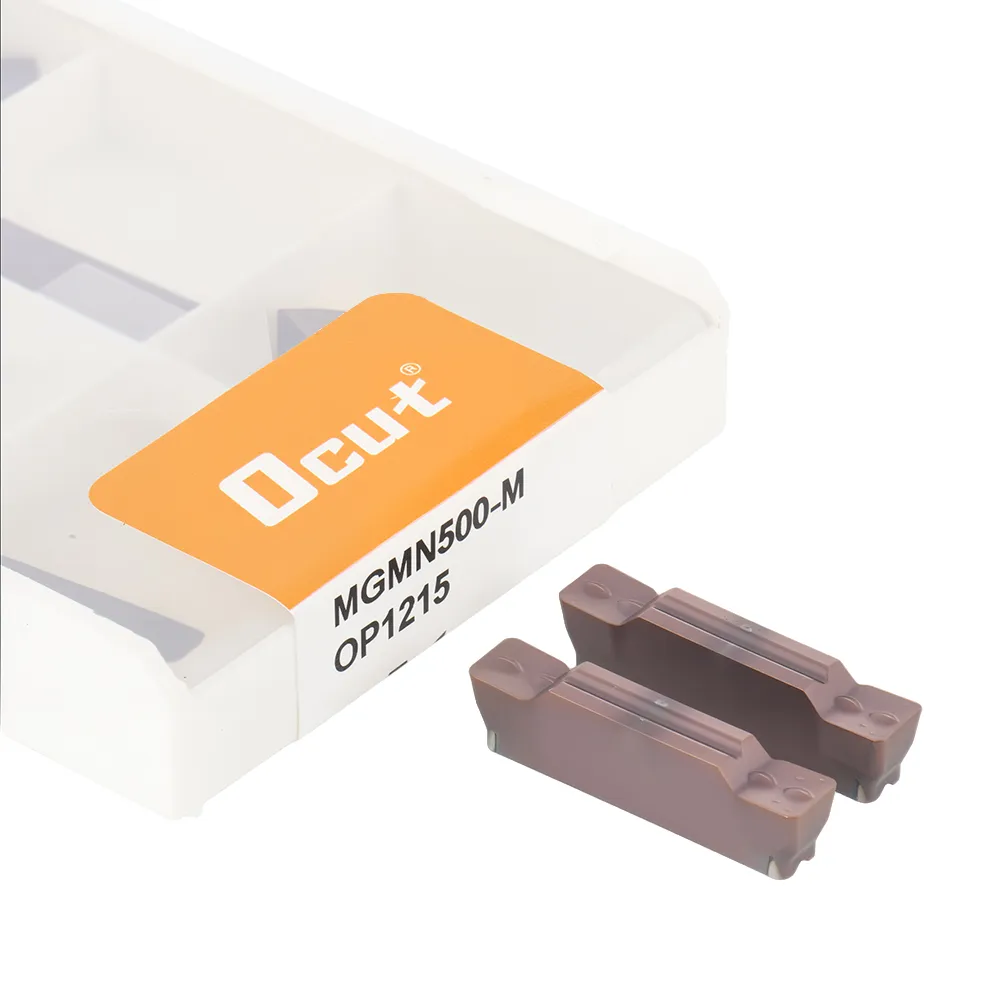
Threading tools are like precision scissors for "hairdressing" metal. Through the perfect coordination of the lathe spindle rotation and tool feed, they cut spiral grooves on the workpiece surface. Common 60° pointed tools are suitable for ordinary threads, trapezoidal tools are specialized for transmission threads, and circular arc tools can machine smooth sealing threads. The key is to match the tool profile to the thread type, just as different hairstyles require different scissors.
Three major application scenarios in practice:
Batch thread machining: 5 times more efficient than dies, especially suitable for the production of standard parts such as bolts.
Large diameter threads: Easily machine large workpieces that dies cannot handle, such as pipe threads.
Custom special threads: Pitch and thread profile can be freely adjusted to meet the needs of non-standard parts.
Secrets to extending tool life: Remember these three points during operation to extend your threading tool's life by six months: First, control the cutting speed; ideally, maintain 150-200 rpm when machining steel parts. Second, use a layered cutting method, with each feed not exceeding 0.2mm. Finally, don't forget to use cutting fluid to cool the tool; like applying a "mask" to the tool, it effectively prevents overheating and wear of the cutting edge.