Hey there! As a supplier in the milling cutting industry, I've seen firsthand how crucial it is to adjust cutting parameters for different milling operations. It's not just about getting the job done; it's about doing it efficiently, effectively, and with the best possible results. In this blog, I'll share some tips and insights on how to adjust those parameters based on various milling scenarios.
Understanding the Basics
Before we dive into the specifics, let's quickly go over the key cutting parameters in milling. These include cutting speed (Vc), feed rate (f), depth of cut (ap), and width of cut (ae). Each of these parameters plays a vital role in the milling process, and getting them right can make a huge difference in the quality of the finished product, as well as the tool life and productivity.
Cutting Speed (Vc)
Cutting speed is the speed at which the cutting edge of the tool moves relative to the workpiece. It's usually measured in meters per minute (m/min) or surface feet per minute (SFM). The cutting speed depends on several factors, such as the material of the workpiece, the material of the cutting tool, and the type of milling operation. For example, when milling aluminum, you can typically use a higher cutting speed compared to milling steel.
Feed Rate (f)
The feed rate is the distance the tool travels along the workpiece per revolution. It's measured in millimeters per revolution (mm/r) or inches per revolution (ipr). The feed rate affects the surface finish of the workpiece and the amount of material removed per pass. A higher feed rate can increase productivity, but it may also result in a rougher surface finish.
Depth of Cut (ap)
The depth of cut is the distance the tool penetrates into the workpiece. It's measured in millimeters (mm) or inches (in). The depth of cut depends on the strength of the tool, the power of the machine, and the material of the workpiece. A larger depth of cut can remove more material in less time, but it also puts more stress on the tool and the machine.
Width of Cut (ae)
The width of cut is the distance the tool cuts across the workpiece. It's also measured in millimeters (mm) or inches (in). The width of cut affects the cutting forces and the stability of the tool. A wider width of cut can increase the productivity, but it may also cause the tool to vibrate or chatter.
Adjusting Parameters for Different Milling Operations
Face Milling
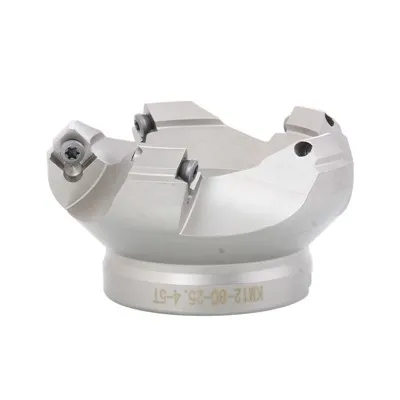
Face milling is used to machine flat surfaces on the workpiece. When doing face milling, you want to focus on getting a good surface finish and removing material efficiently. For a 45 Face Milling Cutter, you can start by selecting a cutting speed based on the workpiece material. For example, if you're milling mild steel, a cutting speed of around 100 - 150 m/min might be a good starting point.
The feed rate for face milling can be set according to the number of teeth on the cutter and the desired surface finish. A feed rate of 0.1 - 0.3 mm/tooth is common for general face milling operations. The depth of cut can be around 1 - 5 mm, depending on the machine's power and the tool's strength. The width of cut should be adjusted to cover the entire surface you want to mill, but be careful not to exceed the tool's recommended width of cut.
End Milling
End milling is used to machine slots, pockets, and profiles. When end milling, the cutting forces are more complex compared to face milling. For a 300R CNC Milling Arbor, you need to consider the tool's diameter and the type of end mill.

The cutting speed for end milling is usually lower than face milling, especially when using small-diameter end mills. For example, if you're using a 6 mm end mill to mill stainless steel, a cutting speed of 30 - 60 m/min might be appropriate. The feed rate can be around 0.05 - 0.2 mm/tooth. The depth of cut for end milling is typically limited by the tool's length and the machine's rigidity. A depth of cut of 0.5 - 3 mm is common for roughing operations, and a smaller depth of cut for finishing operations.
Ball Nose Milling
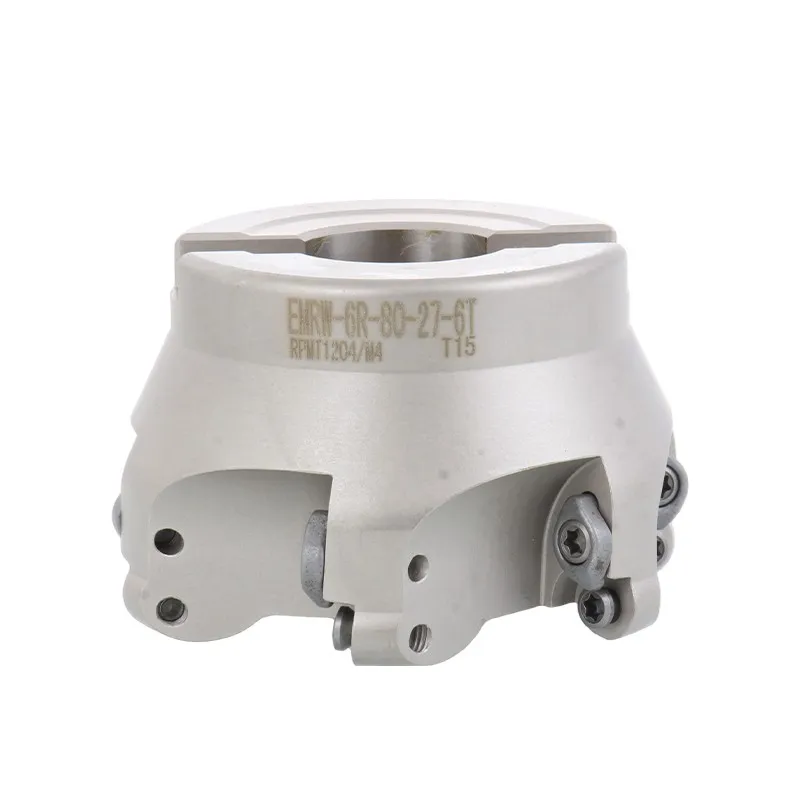
Ball nose milling is used for machining curved surfaces, such as molds and dies. A Round Nose Face Milling Cutter is often used for this type of operation. When ball nose milling, the cutting speed and feed rate need to be adjusted carefully to avoid excessive tool wear and achieve a good surface finish.
The cutting speed for ball nose milling is similar to end milling, but it may need to be adjusted based on the radius of the ball nose. A feed rate of 0.02 - 0.1 mm/tooth is common for ball nose milling. The depth of cut should be relatively small, usually less than the radius of the ball nose, to ensure a smooth surface finish.
Factors to Consider When Adjusting Parameters
There are several other factors that you need to consider when adjusting the cutting parameters for different milling operations.
Workpiece Material
The material of the workpiece has a significant impact on the cutting parameters. Harder materials, such as stainless steel and titanium, require lower cutting speeds and feed rates compared to softer materials, such as aluminum and brass. You also need to consider the material's hardness, toughness, and heat conductivity when selecting the cutting parameters.
Tool Material
The material of the cutting tool also affects the cutting parameters. Carbide tools are more wear-resistant and can withstand higher cutting speeds compared to high-speed steel (HSS) tools. However, carbide tools are more brittle and may require more careful handling. When using carbide tools, you can generally increase the cutting speed and feed rate compared to HSS tools.
Machine Capacity
The capacity of the milling machine, including its power, spindle speed, and rigidity, also plays a role in determining the cutting parameters. A more powerful machine can handle higher cutting speeds and depths of cut. The spindle speed range of the machine limits the maximum cutting speed that can be achieved. The rigidity of the machine affects the stability of the tool and the quality of the cut.
Coolant and Lubrication
Using coolant and lubrication can improve the cutting performance and tool life. Coolant helps to reduce the temperature at the cutting edge, which can prevent tool wear and improve the surface finish. Lubrication reduces the friction between the tool and the workpiece, which can also improve the cutting efficiency. When using coolant, you may need to adjust the cutting parameters slightly to take advantage of its benefits.
Fine-Tuning the Parameters
Once you've selected the initial cutting parameters based on the type of milling operation, workpiece material, tool material, and machine capacity, you may need to fine-tune them based on the actual cutting conditions. Here are some tips on how to do that:
Monitor the Cutting Process
Pay attention to the cutting process and look for signs of problems, such as excessive tool wear, poor surface finish, or vibration. If you notice any of these issues, you may need to adjust the cutting parameters. For example, if the tool is wearing too quickly, you may need to reduce the cutting speed or feed rate.
Conduct Test Cuts
Before starting a large-scale production run, it's a good idea to conduct test cuts on a sample workpiece. This allows you to evaluate the cutting parameters and make any necessary adjustments. You can measure the surface finish, dimensional accuracy, and tool wear after the test cuts to determine if the parameters are appropriate.
Use Cutting Parameter Calculators
There are many cutting parameter calculators available online that can help you select the appropriate cutting parameters based on the workpiece material, tool material, and machine capacity. These calculators can provide you with a starting point for your milling operations, but you still need to fine-tune the parameters based on the actual cutting conditions.
Conclusion
Adjusting the cutting parameters for different milling operations is a crucial skill for any milling cutting supplier. By understanding the basics of cutting parameters, considering the factors that affect them, and fine-tuning them based on the actual cutting conditions, you can achieve better results, improve tool life, and increase productivity.
If you're in the market for high-quality milling cutting tools and need more advice on adjusting cutting parameters, feel free to reach out to us. We're here to help you find the right solutions for your milling operations.
References
- "Machining Handbook", various editions
- "Modern Machining Technology", by John A. Schey
- Industry whitepapers on milling cutting operations