CNC milling cutters can be systematically classified according to their intended application, structural design, and the method used to machine their tooth backs.
Classified by application, the main categories include cylindrical milling cutters, used on horizontal milling machines to machine flat surfaces; face milling cutters, used on vertical, end-face, or gantry milling machines to machine flat surfaces; end mills, used to machine grooves and stepped surfaces; three-side milling cutters, used to machine various grooves and stepped surfaces; angular milling cutters, used to mill grooves at specific angles; and slitting saws, used to machine deep slots and cut off workpieces. Additionally, there are keyway cutters, dovetail cutters, T-slot cutters, and various types of form milling cutters.
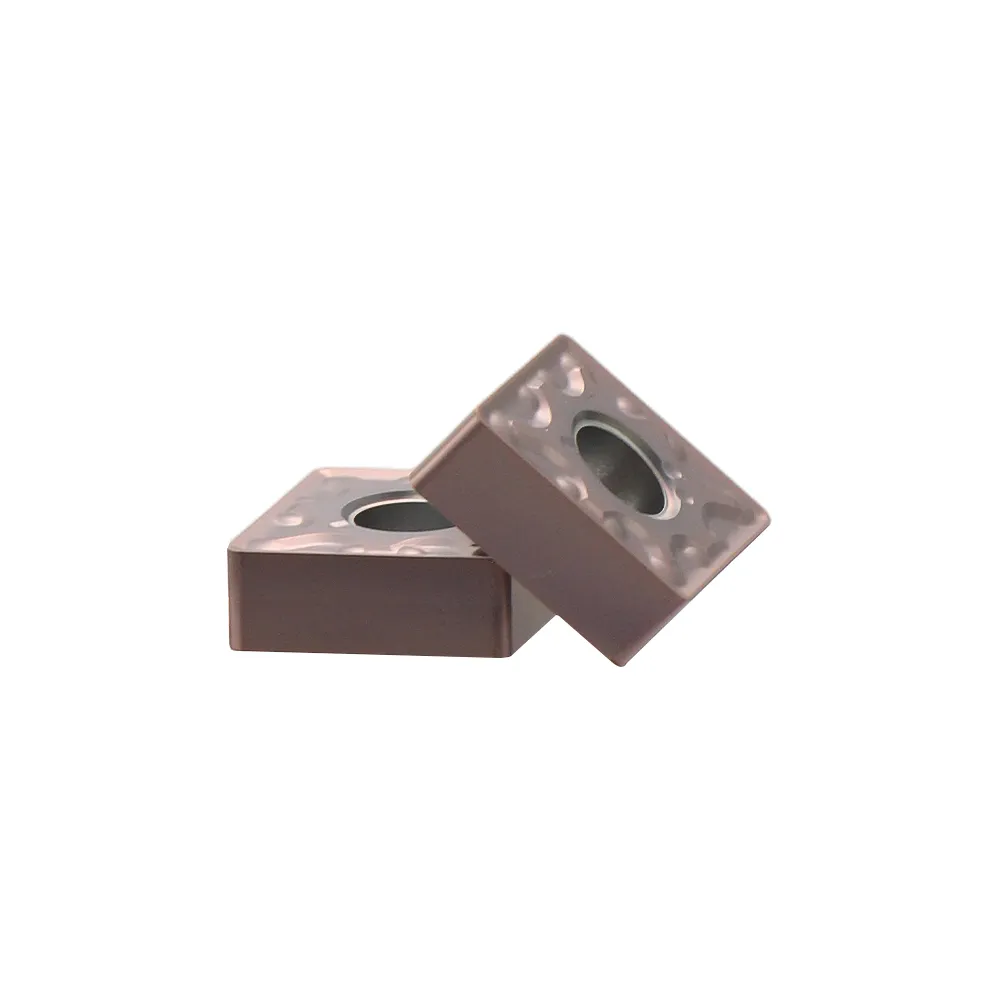
Classified by structure, milling cutters can be divided into solid-body, brazed-tooth, inserted-tooth, and indexable types. In the solid-body type, the cutter body and teeth are manufactured as a single integral unit; in the brazed-tooth type, the teeth are made of cemented carbide or other wear-resistant tool materials and are brazed onto the cutter body; in the inserted-tooth type, the teeth are mechanically clamped and secured to the cutter body; and the indexable type falls under the category of indexable tooling.
Classified by the method used to machine their tooth backs, milling cutters are divided into relieved-tooth cutters and form-relieved cutters. Relieved-tooth cutters feature a narrow land ground onto the flank face to create a clearance angle; they offer a longer tool life, and their tooth backs can take one of three forms: straight, curved, or polygonal. Form-relieved cutters have their flank faces machined-typically via a relieving (or form-grinding) process-to follow an Archimedean spiral profile; when the tool becomes dull, only the rake face requires regrinding, thereby preserving the original tooth profile. This design is commonly used in the manufacture of gear milling cutters and various other types of form milling cutters.
Common types of milling cutters are broadly categorized into flat-end mills, ball-nose mills, and form milling cutters. Flat-end mills are used for rough milling to remove large volumes of material, and can also be utilized for the finish milling of small horizontal surfaces or contours; ball-nose mills are used for the semi-finish and finish milling of curved surfaces, while smaller-diameter versions can be used to finish-mill steep surfaces or create small chamfers on vertical walls. Form milling cutters include chamfering cutters, T-slot cutters (also known as drum cutters), gear-form cutters, internal radius cutters, and similar specialized tools. Face milling cutters feature cutting edges on both their peripheral and end faces; they are typically constructed with an inserted-tooth design, utilizing high-speed steel or carbide for the cutter teeth. End mills possess cutting edges on both their cylindrical surface and end face, allowing for simultaneous or independent cutting operations; the cutting edges located on the cylindrical surface serve as the primary cutting edges. Keyway milling cutters are equipped with two cutting teeth and feature cutting edges on both their cylindrical and end faces; during machining, the tool first feeds axially to reach the required slot depth, then traverses along the direction of the keyway to mill its full length. Thread milling cutters, designed specifically for generating threads on CNC machine tools, enable the machining of high-hardness materials through three-axis simultaneous control, thereby establishing themselves as a widely adopted and practical category of cutting tools. Common materials used for milling cutters include high-speed steel and carbide; the latter, characterized by its high hardness and superior cutting strength, allows for increased spindle speeds and feed rates, making it particularly suitable for machining difficult-to-cut materials such as stainless steel and titanium alloys.