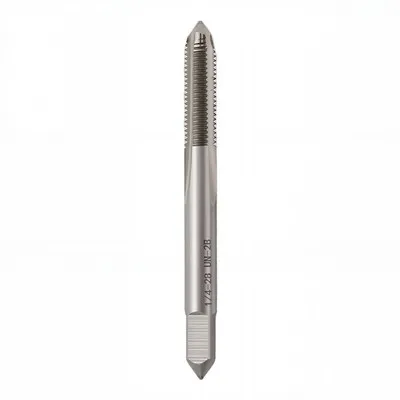
Can a twist drill be used for precision drilling? That's a question I get asked a lot as a twist drill supplier. And the answer is, it depends. Let's dive into this topic and explore when a twist drill can be a great tool for precision work and when you might need to look elsewhere.
First off, what exactly is a twist drill? Well, it's one of the most common types of drill bits out there. You've probably seen them in your local hardware store or in a toolbox. Twist drills have a spiral flute design that helps to remove chips from the hole as you drill. This design is what gives them their name. They come in all sorts of sizes and materials, like high - speed steel (HSS), cobalt HSS, and more.
When it comes to precision drilling, there are a few factors we need to consider. One of the big ones is the material you're drilling into. Different materials have different hardness levels and properties, and this can affect how well a twist drill performs.
For softer materials like wood, plastics, and some non - ferrous metals, a twist drill can be a fantastic choice for precision drilling. The spiral flutes do a great job of clearing away the chips, and you can usually get a clean, accurate hole. For example, if you're building a wooden bookshelf and need to drill holes for the shelves to attach, a HSS Twist Drill Set would work just fine. These sets typically come with a variety of sizes, so you can choose the right one for your project.
But when you're dealing with harder materials like stainless steel or hardened steel, things get a bit trickier. Harder materials can cause the drill bit to wear out quickly, and it can be more difficult to maintain precision. That's where a Cobalt HSS Twist Drills might come in handy. Cobalt HSS drill bits are more heat - resistant and harder than regular HSS bits, which means they can handle tougher materials better. They might cost a bit more, but they can save you a lot of time and frustration in the long run.
Another factor that affects precision is the drill press or the tool you're using to hold the drill bit. A good quality drill press with a stable base and accurate speed control can make a huge difference. If you're using a handheld drill, it's a bit more challenging to maintain precision, but with some practice and the right technique, it's still possible.
The sharpness of the twist drill is also crucial. A dull drill bit can cause all sorts of problems, like uneven holes, excessive heat, and even breakage. You should always keep your drill bits sharp. You can use a drill bit sharpener to do this, or if you're not confident in your sharpening skills, you can send them to a professional.
Now, let's talk about some of the limitations of using a twist drill for precision drilling. One of the main issues is that twist drills can wander when you first start drilling. This means that the hole might not be exactly where you want it. To combat this, you can use a center punch to create a small indentation where you want to drill. This gives the drill bit a starting point and helps to keep it on track.
Another limitation is that twist drills might not be the best choice for very small or very large holes. For extremely small holes, you might need a specialized micro - drill bit. And for very large holes, a twist drill might not be powerful enough, and you might need to use a hole saw or another type of cutting tool.
But despite these limitations, there are many situations where a twist drill can be used for precision drilling. For example, in the automotive industry, twist drills are used to drill holes for bolts and other components. In the electronics industry, they're used to drill holes in circuit boards. And in the manufacturing industry, they're used for a variety of precision drilling tasks.
If you're in the market for twist drills for precision work, we've got you covered. Our Morse Taper Shank Twist Drills are designed for high - precision applications. They have a unique taper shank that allows for a secure fit in the drill press, which helps to improve the accuracy of your drilling.


We also offer a wide range of other twist drill options, from small - sized bits for delicate work to large - sized bits for heavy - duty applications. Whether you're a professional contractor, a DIY enthusiast, or someone in a manufacturing plant, we have the right twist drill for you.
If you're interested in learning more about our twist drills or if you have any questions about using them for precision drilling, don't hesitate to reach out. We're here to help you make the best choice for your project. We can provide you with detailed information about the different types of twist drills, their features, and their applications. And if you're ready to place an order, we can guide you through the process.
In conclusion, a twist drill can be used for precision drilling in many situations, but it's important to consider the material, the tool you're using, and the sharpness of the drill bit. With the right knowledge and the right tools, you can achieve high - precision results with a twist drill. So, if you're looking for a reliable and versatile tool for your drilling needs, give our twist drills a try.
References:
- General knowledge about drill bits from years of experience in the twist drill supply industry.
- Technical specifications and product information from drill bit manufacturers.